


Here we give share some Frequently Asked Questions (and the answers), a list of websites with information about Malawi, travellers’ health, and other subjects, but please don’t use this as a definitive list, especially regarding health, malaria, visas, flight and transport information. If you find any other websites that you think would be worth adding, please let us know.
Lorem ipsum dolor sit amet, consectetur adipiscing elit. Ut elit tellus, luctus nec ullamcorper mattis, pulvinar dapibus leo.
How do I get to Mwaya Beach or Lowani Beach?
Directions and taxi advice will be sent to you when we confirm your trip to visit us.
What clothing do I need to bring?
A suggested packing list can be sent to you.
Can I drink the water at Mwaya Beach and Lowani Beach?
Yes, you can drink the water as it comes from a borehole. There is no need to bring water purifying tablets.
Can I swim in the lake?
The short answer is ‘yes’ with some degree of caution.
People are often worried about bilharzia (schistosomiasis) and, although this is present in most African freshwater lakes, it is normally found where there are reeds, water snails, slow-moving water and people. At Mwaya, there are no reeds and there is good wave action and, to our knowledge, none of our volunteers have contracted bilharzia.
However, there are crocodiles and hippos in some of the rivers and these are occasionally washed into the lake during the rainy season (we have seen them off the beach several times in recent years). We do advise volunteers not to swim between 6pm and 6am because crocodiles are at their most active at night, and we strongly recommend volunteers to be very careful if they go swimming in the lake during the rainy season. Our local staff will be able to tell you if crocodiles or hippos have been seen so ask them before you go into the lake to be on the safe side!
What is the accommodation like and is it shared?
Mwaya Beach – There are five wooden chalets which are large (7m by 5m), light, airy and comfortable. Each one can sleep up to two or three people. Beds, bed linen (pillowcases and sheets), pillows, blankets, and mosquito nets are provided. There is a toilet and shower block with two showers and three flushing toilets, a kitchen and storeroom, complete with a fridge, and a large covered meeting area and deck overlooking the lake.
We have two brick and thatch chalets at Mwaya Beach too.
Lowani Beach – There are three cottages which sleep up to three. Each cottage is furnished the same as those at Mwaya Beach, and all bed linen and mosquito nets are provided. Each cottage has a verandah and views of the lake. There is a toilet and shower block with three showers and three flushing toilets, a storeroom and a thatched dining/training area.
How much does it cost to stay at Mwaya Beach or Lowani Beach?
The charges above and all money from visitors is paid into the Ripple Africa running expenses fund.
Who runs Mwaya Beach?
Morton (Mwaya Manager) and Dan (Assistant Manager) manage all the staff, assist the visitors, and deal with day-to-day issues.
Who runs Lowani Beach?
Esther is the Host at Lowani Beach. She manages the staff there and will assist visitors with any day-to-day issues. Dan is available too.
What is the climate like?
Please read The Seasons section on the Malawi Facts and Figures page.
How safe is it in Malawi and at Mwaya?
Malawi is pretty safe and its people are some of the friendliest you are likely to meet in Africa.
As with any country in the world, you do have to be careful as the cities and towns in Malawi have their fair share of con artists and thieves, and our advice is to be sensible about carrying money and valuables, as you would be in cities in the West. Matete also has several bars and we would advise that you do not visit these or wander around too much after dark to avoid any potential issues. It is important to bear in mind that Malawi is in the top 10 of the world’s poorest countries and, although US$1 is not a fortune to us, it is the average daily wage for a Malawian — if they’re lucky enough to have a job. This being said, we’ve never felt threatened by anyone in Mzuzu or Lilongwe — there’s just the annoyance of people coming up and trying to sell you anything from wood carvings to windscreen wipers!
Is there electricity?
There is now mains electricity at Mwaya Beach but Escom, the electricity provider, is not too reliable and there are frequent outages so headtorches are still needed. There is limited solar power in the office and to run the fridge in the kitchen storeroom. We use paraffin lanterns at night and cook on a wood-burning stove. If you bring phone or computer chargers, a normal UK plug will work in the chalets. Currently, there is no electricity at Lowani Beach.
If I visit your projects, will I have any free or leisure time?
Yes, you will have plenty of free time, and you can enjoy the beach, swimming, reading, playing games with local children, and other simple pastimes. There are some wonderful walks in the area.
What are the major health risks with visiting Malawi?
The most significant health risk is malaria. It is essential that all visitors take malaria prophylaxis — please speak to your doctor about this. We recommend that every late afternoon, you spray on an insect repellent and/or wear long trousers, long-sleeved shirts, etc. All of the beds have mosquito nets which are treated with an insecticide twice a year. Bilharzia (schistosomiasis), which is easily treatable, is present in Lake Malawi, but to our knowledge none of our previous volunteers who have swum regularly in the lake have contracted the disease. Rabies is also present in Malawi, and we advise visitors to have rabies vaccinations if possible. Full details about recommended vaccinations and a list of suggested medicines to bring with you are available.
Is there a hospital nearby?
There is the Community Dispensary at Mwaya, and Health Centres at Kachere (7km to the south) and Kande (7km to the north), but it is unlikely that they would be able to help in an emergency. We recommend visitors are taken either to Matiki hospital which is on the Illovo sugar estate at Dwangwa, about 100km south of Mwaya (about an hour’s drive) or to St John’s Hospital in Mzuzu (about 1½ hours’ drive). They are both well-equipped facilities with qualified doctors, clinical officers, and trained nurses. There is also a private hospital in Nkhata Bay. Although you will have to pay for any tests or treatments, the sums involved are very reasonable compared to private hospitals in the West.
What medicines would you recommend me to take to Malawi?
As previously mentioned, definitely your malaria prophylaxis. We have found that taking a broad spectrum antibiotic, like ciprofloxacin, is also very useful for treating serious diarrhoea and vomiting. It is wise to have some rehydration salts — these are essential should you have an upset stomach. Tincture of iodine or an iodine-based antiseptic cream (e.g. Betadine ointment) is invaluable for treating wounds and sores, plus an antibiotic cream. Take wound dressings, and it’s always useful to have your own First Aid kit. There is a pharmacy in Chintheche and in Mzuzu where you can buy most medicines that you are likely to require. However, we strongly advise you to consult your doctor before travelling.
What currency is used in Malawi?
The Malawi kwacha is the local currency which you can get at the airport when you arrive. We would recommend that you bring American dollars and British pounds (if you are coming from the UK) as these are easily exchanged at any Bank and some services, such as taxi’s, prefer US$. Bring US$50 notes and some US$10 notes — these can always be used for paying for safaris, visas, and any other Lodge accommodation. Do not take US$100 notes as no one will change them because there are so many fake notes circulating in Africa.
Can I obtain cash with my credit card?
Yes, there are ATMs in Lilongwe and Mzuzu, but there is not an ATM that accepts foreign credit/debit cards in Nkhata Bay.
Can I change money on arrival?
You will not be able to obtain any Malawi kwacha before you arrive, but you can change money at the airport and there are often moneychangers at the border crossings. It is a good idea to be aware of the exchange rate before you get to Malawi.
Is the charity registered?
Yes, Ripple Africa in the UK is registered with the Charity Commission of England and Wales, registration number 1103256, and with the Office of the Scottish Charity Regulator (OSCR), registration number SC043082. Ripple Africa, Inc. in the USA is also registered as a 501(c)3, and the EIN is 26-2059213.
How should visitor fees and donations be paid?
We will provide you with the necessary details by e-mail when we confirm your visit with us. Donations can be made online via the Ripple Africa website by clicking on the Donate button at the top of each page.
How much is the visitor fee?
The charges above and all money from visitors is paid into the Ripple Africa running expenses fund.
Can I bring books for the children?
Your luggage weight allowance will limit what you can bring. However, the children love learning about their country and Africa in general so any fiction where the central characters are Africans will be a great hit. There are some bookshops in Mzuzu and Lilongwe which sell books like this, so it may be best to bring some money with you and buy the books in Malawi. Although many people have collected lots of things for the community at Mwaya, the difficult part is to deliver them because postage/shipping is incredibly expensive. Our best advice is that the most useful contribution you can make would be to provide cash to help with all the projects we are constantly becoming involved with, for example constructing school buildings, developing the environmental projects, etc.
Can I bring prizes and gifts for the children?
Everyone at Mwaya has so little that singling out certain people, adults or children, to give things to is very difficult. It is sometimes useful to bring things that can be used by groups of people, for example a football. If you gave gifts out at a school, you would probably be mobbed. The best thing you can give the children is your time, energy, and enthusiasm.
Where can I e-mail/telephone from?
There is relatively good internet access at Mwaya Beach and Lowani Beach using a mobile internet connection for which you will need a mobile internet enabled Airtel SIM card. More detailed information about this can be provided.
What are the ages of the children at the pre-schools?
The children at the pre-schools are from two years old up to six years old, after which they will move into Standard 1 at their nearest primary school.
What happens on a pre-school visit?
The emphasis is on teaching the children the alphabet, numbers, how to count, and how to write using games, songs, and rhymes. The pre-school teachers will welcome any new songs or games that you may be able to give them. Visiting the pre-schools is truly inspiring and great fun!
How many children attend the pre-schools?
The number of children attending each pre-school can be up to 70 every day. The introduction of the sweet potato project is encouraging more children to come to school as they are given tea to drink and sweet potatoes to eat.
What are the ages of the children at the school?
All the local primary schools in the area (Mwaya, Mazembe, Matete, Kachere, Chiomba, and Kasando) have eight forms, called Standards. The children start in Standard 1 at six years old and progress through the school to Standard 8, where they should be aged 12 to 13 years old. However, they do not progress automatically each year because they have to re-take the year if they do not pass their end-of-year exams. Consequently, some pupils can be 17 or 18 years old in Standards 6, 7 or 8.
What size are the classes?
The number of children attending the local primary schools can be anywhere between 450 to in excess of 1,000, and there are usually between 70 and 180 children per class. However, not everybody attends school every day, and a normal size class will be 60 to 80 pupils. Now that Ripple Africa pays for additional Malawian trainee teachers at three of the primary schools, the headteachers have been able to split some year groups into two classes which has reduced the number of children in each class.
What are the ages of the students at the school?
The students should start secondary school at 13 or 14 years old, but they can often be older if they have re-taken their Primary School Leaving Certificate exams a few times.
What size are the classes?
The average number of students in each Form is 50, much lower than at the primary schools. There are a comparatively high number of Malawian teachers at Kapanda so it may be possible to split the Forms for certain subjects.
Can I bring medical supplies with me for the health centre?
Yes, you can, but we would suggest bringing a fairly small quantity which you can include within your luggage weight allowance. However, please remember that, with potentially 8,000 patients served by Mwaya Community Dispensary and 13,000 by Kachere Health Centre, anything you bring with you will be a drop in the ocean.
What is the local attitude to women?
In Africa, society is generally very male dominated, and women are generally regarded as second-class citizens. Women tend to work very hard at cooking, working in the fields, and bringing up the family and some run their own businesses and hold quite senior positions in the community, but they are in the minority. Men usually are the business people but many men in our area are without employment as our area is quite poor. Locally, the educated men do understand that our volunteers come from a different culture where women are considered more equal to men, and generally treat them accordingly. As a foreigner, or ‘mzungu’ (white person), you will be treated with respect by everyone, but men traditionally prefer to receive instructions from another man. Ripple Africa is slowly changing that perception as we have employed a number of female project managers and coordinators and most of the UK staff team (who visit Mwaya twice a year) are female and have developed close working relationships with the local community.
What is the local attitude towards Americans?
We have been asked this question by a number of American visitors. To date, we have not experienced any anti-American feeling nor have we found any animosity towards any other nationality. There are quite a number of Muslims in the country (about 20% of the population), and they live in harmony with the majority Christian population. Malawi really is the ‘Warm Heart of Africa’, and you’ll see why once you get there.
Do I need to get a visa before I arrive in Malawi?
No, most nationalities will not have to get a visa for Malawi prior to arriving in the country but you will given a 30-day visitor’s permit upon entry. This can be extended, depending on the length of your placement. We can provide more information on this. If you do require a visa, please contact our team who will guide you on what you need to do.
What things can I bring for the schools, Dispensary/Health Centre, projects, etc?
The things you can bring will be limited by your luggage weight allowance. We have a Wish List which we would be happy to share with you.
What is the normal luggage weight allowance on flights to Africa?
The weight allowance for hold luggage on a flight to Lilongwe with either Ethiopian Airlines or Kenya Airways is a total of 46kg (two bags weighing a maximum of 23kg each) per person plus 10kg cabin luggage. However, we recommend you check with the airline beforehand. Please be careful not to exceed this as airlines do make punitive charges for excess baggage.
Do I need travel insurance?
Yes, most definitely. You will need full insurance cover for medical expenses (including repatriation), personal accident and personal possessions.
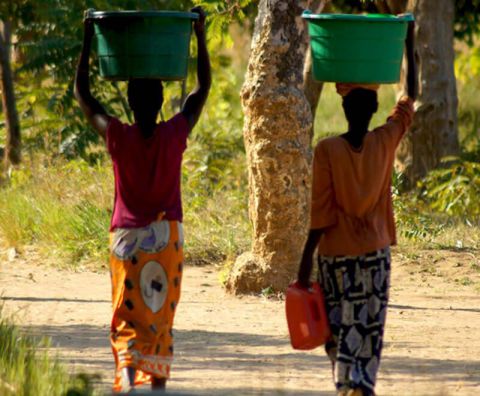
EARLY MORNING WATER CARRYING

SMILE, IT’S THE WARM HEART OF AFRICA
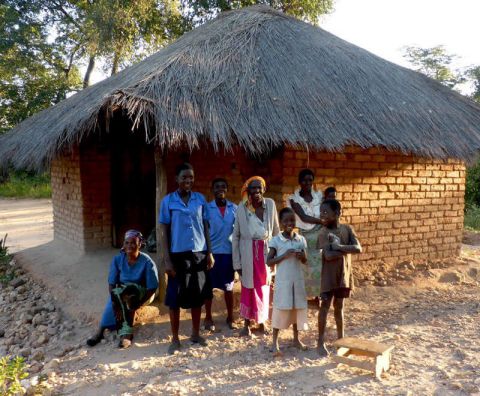
MALAWIAN FAMILY AND THEIR HOME
There are several good websites outlining the health risks in Malawi, two of which are the MASTA website in the UK and the Centers for Disease Control and Prevention (CDC) website in the US (see links below). You must seek medical advice from your doctor about vaccinations and malaria prophylaxis. In addition, we recommend that you take a basic First Aid course prior to travelling to Malawi. Please note that you may need a Yellow Fever international vaccination card if you are travelling to other African countries from Malawi, or vice versa.
If you are planning your trip, some interesting long weekend or week-long breaks include Likoma and Chizumulu islands, Usisya and Rurawe (villages north of Nkhata Bay only accessible by boat), Livingstonia, etc. For longer breaks within Malawi or to Zambia, we recommend you contact the tour operators listed below. Please make sure you have the correct vaccinations; for example, you may have to have a Yellow Fever international vaccination card to get into other African countries.
1 2 Travel Africa will will organise tailor-made safaris and trips to suit you.
Other tour operators based in Malawi are:
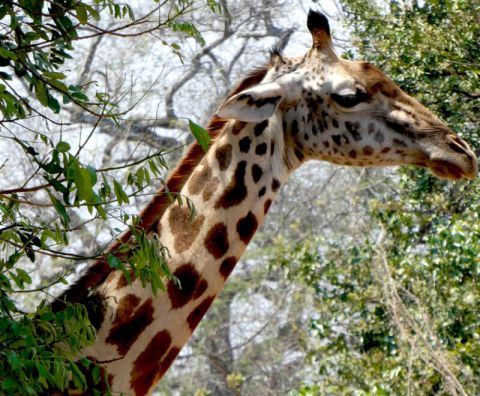
TAKE THE CHANCE TO GO ON SAFARI
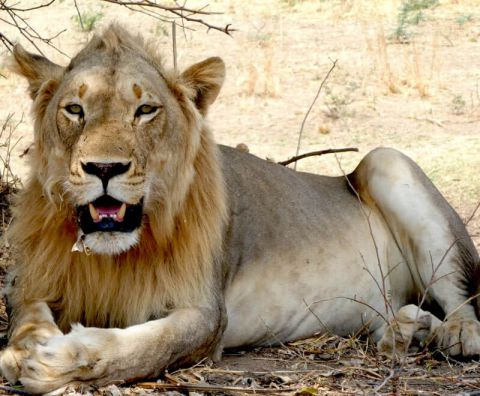
NEIGHBOURING ZAMBIA HAS GREAT SAFARIS

IT IS AMAZING TO SEE ANIMALS IN THE WILD
Our volunteer placements for 2026 are closed as we focus on some exciting project developments. There are other volunteer opportunities in Malawi including:
If you want to know more about Africa, its history, its people and its problems, then there are a few books we recommend you read. They are:
and another book we haven’t read yet but which has had very good reviews:
If anyone has read other books that they could recommend, please let us know and we can add them to the list.
We use cookies to improve your experience on our site. By using our site, you consent to cookies.
Websites store cookies to enhance functionality and personalise your experience. You can manage your preferences, but blocking some cookies may impact site performance and services.
Essential cookies enable basic functions and are necessary for the proper function of the website.
These cookies are needed for adding comments on this website.
Google Tag Manager simplifies the management of marketing tags on your website without code changes.
Stripe is a payment processing platform that enables businesses to accept online payments securely and efficiently.
Service URL: stripe.com (opens in a new window)
